
E3D V6 Hotend
Comprehensive guide to the E3D V6 hotend
On this page
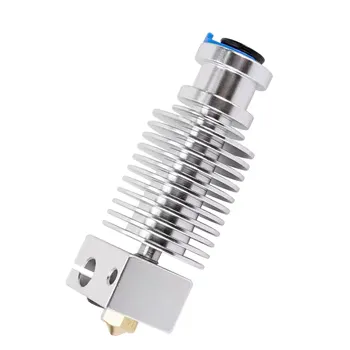
Overview#
The E3D V6 hotend is one of the most influential and widely adopted hotends in the history of consumer 3D printing. First released in 2014, the V6 has become the industry standard that many other hotends are measured against. Its reliable design, excellent performance, and vast ecosystem of compatible parts have made it a cornerstone of the 3D printing community.
Key Features#
All-Metal Design#
- High-Temperature Performance: The all-metal construction allows the V6 to comfortably reach 300°C with the supplied thermistor, making it suitable for standard materials like PLA and PETG as well as engineering materials like Nylon and Polycarbonate
- No PTFE in Hot Zone: Unlike PTFE-lined hotends, the V6’s all-metal design prevents degradation when printing at high temperatures
Modular Construction#
- Cartridge-Style Heater Block: Enables easy replacement of both heater cartridges and temperature sensors
- Interchangeable Components: Nozzles, heat breaks, and heat sinks can all be swapped out independently
Universal Compatibility#
- Groove Mount: The standardized groove mounting system has become an industry standard
- V6-Compatible Ecosystem: Massive ecosystem of parts and upgrades that use the V6 mounting system
Precision Engineering#
- Sharp Thermal Break: Provides better control over filament output
- Improved Extrusion Control: Results in better start/stop performance and more effective retraction
Specifications#
| Specification | Detail |
|---|---|
| Maximum Temperature | 285°C (standard) / Up to 500°C (with plated copper heater block and PT100) |
| Weight | 26g |
| Filament Diameter | Available in 1.75mm and 2.85mm variants |
| Mounting System | Groove mount |
| Heater Power | 30W (standard) |
| Nozzle Thread | M6 |
| Body Material | Aluminum (heatsink), Stainless Steel (heat break), Aluminum/Plated Copper (heater block) |
Variants#
Standard V6#
- The classic V6 hotend with aluminum heater block
- Available in 12V and 24V versions
- Available in direct drive and Bowden configurations
V6 Gold#
- Premium version with gold-plated copper heater block
- Superior thermal conductivity
- Better heat distribution for more consistent extrusion
Historical Significance#
The E3D V6 represented a significant advancement in hotend design when it was released in 2014. It addressed many issues found in earlier hotends:
- Decreased Bulk: More compact design compared to predecessors
- Improved Maintenance: Eliminated the need for hard-to-work-with Kapton tape for securing thermistors
- Better Support for Flexible Filaments: Enhanced design to reduce buckling issues
- Faster Heat-up Times: Redesigned heater block for better thermal contact
- Enhanced Reliability: Addressed jamming issues through improved heat break design
- Size-Specific Nozzles: Introduced nozzles with tip geometry optimized for each size
Installation Tips#
- Heat Tightening: Always tighten the nozzle when the hotend is at printing temperature (usually ~285°C)
- Gap Prevention: Ensure there is no gap between the heat break and nozzle inside the heater block
- Thermal Compound: Apply a small amount of thermal compound between the heat break and heatsink
- Cooling: Ensure proper cooling with the 30mm fan positioned correctly over the heatsink
Maintenance#
- Regular Cleaning: Periodically clean the nozzle to prevent clogs
- Check Connections: Ensure the heat break and heat block connections are tight and gap-free
- Inspect Wiring: Check heater cartridge and thermistor wiring for damage
- Nozzle Replacement: Replace nozzles if worn or damaged
Community & Legacy#
The E3D V6 has been integrated into many popular 3D printer designs, including:
- Prusa i3 MK2 and MK3 series (modified variant)
- Many Voron models (before Revo Voron)
- Numerous CoreXY designs
- Countless custom and DIY printers
Its open design philosophy encouraged third-party manufacturers to create compatible components, expanding the ecosystem and ensuring its longevity in the market.
Comparison to Newer Hotends#
While newer hotends offer specific advantages in certain areas, the V6 remains relevant due to:
- Proven Reliability: Extensively tested design with years of refinement
- Universal Compatibility: Massive ecosystem of compatible parts
- Cost Effectiveness: Generally more affordable than newer options
- Simplicity: Straightforward design that’s easy to understand and maintain